Lezersrecensie
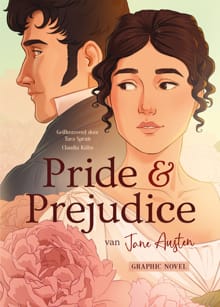
Pride and Prejudice
 RoosinSpanje
10 jan 2022
The story of Jane Austen
Jane Austen was an English novelist. She was born on December 16 in 1775 and she died on July 18 in 1817. Austen grew up in a close family in the lower echelons of the English nobility. She was mainly educated by her father and her older brothers. She also learned a lot by reading many books. She went to a boarding school in Oxford in 1783, shortly after her older sister Cassandra had also gone there. An illness broke out in the school and then they moved to Southampton. After this they went to another boarding school, this time in Reading. In 1800 her father who was a minister retired. She was not married and at that time it was normal for an unmarried daughter to move in with her family. They moved to Bath. Austen got a lot of support from her family to write . From 1811 to 1816 she achieved success with the novels: Sense and Sensibility (1811), Pride and Prejudice (1813), Mansfield Park (1814) and Emma (1816). One novel was left unfinished because she died before she could finish it; the book was eventually given the title Sanditon. Before her death she lived as an unmarried woman with her older brother Edward. She lived with him until her death at the age of 41 from cancer or the disease of Adisson. Her books were subsequently translated in many languages, but the biggest success were the film adaptations of her books, such as the 2005 film Pride and Prejudice starring Keira Knightley.
Source: https://nl.wikipedia.org/wiki/Jane_Austen https://www.biografiasyvidas.com/biografia/a/austen.htm
The title
The title of my book is Pride and Prejudice. The title refers to the main characters Mr.Darcy and Elizabeth Bennet, as it is pride and prejudice that keep the two apart. Only when they express their prejudices to each other do they discover that they were not true, but to do so they had to put their pride aside. When they've both spoken out the prejudices to each other and swallowed their pride, they see how much they care for each other. That is why the title Pride and Prejudice fits very well with the content of the book. It symbolizes the things they had to overcome in order to realize that they loved each other.
Genre
Pride and Prejudice was written in the early eighteenth century and can be classified as a romantic novel, a historical fiction or a coming of age novel. The characteristics of the book that allow it to be classified as a romantic fiction are the elements of love and marriage, which are recurring themes throughout the novel. You can read this in this quote from the book on p.130 : ''From the very beginning - from the first moment, I may almost say - of my acquintance with you, your manners, impressing me with the fullest belief of your arrogance, your conceit, and your selfish disdain of the feelings of others, were such as to form the groundwork of disapprobation on which succeeding events have built so innovable a dislike; and I had not known you a month before I felt that you were the last man in the world whom I could ever be prevailed on to marry.'' It also shows a part of history, and opens a door for us to see what life for young women in England was like in the early eighteenth century, giving a glimpse at society and life for both the rich and poor families of the time. This means that the novel, in some ways, could also be pigeon-holed as a historical fiction. You can read this in chapter 43 on page 1: ‘Hey gradually ascended for half a mile, and then found themselves at the top of a considerable eminence, where the wood ceased, and the eye was instantly caught by Pemberley House, situated on the opposite side of a valley, into which the road with some abruptness wound. It was a large, handsome, stone building, standing well on rising ground, and backed by a ridge of high woody hills;—and in front, a stream of some natural importance was swelled into greater, but without any artificial appearance. Its banks were neither formal, nor falsely adorned. Elizabeth was delighted. She had never seen a place where nature had done more, or where natural beauty had been so little counteracted by an awkward taste. They were all of them warm in her admiration; and at that moment she felt that to be mistress of Pemberley might be something!’ These lines give a glimpse at society and life of the rich of the time, because it’s shows the huge estates were the rich of that time lived. And the third genre is a coming of age novel. Through the eyes of Elizabeth, we see her perception of the world around her shift over time, and can see how her ideas and views on life slowly develop. This is the basic idea of a coming of age novel, that the protagonist embarks on a journey of internal change, to become more mature. You can read the coming of age of Elizabeth in chapter 36: “How despicably I have acted!” she cried; “I, who have prided myself on my discernment! I, who have valued myself on my abilities! who have often disdained the generous candour of my sister, and gratified my vanity in useless or blameable mistrust! How humiliating is this discovery! Yet, how just a humiliation! Had I been in love, I could not have been more wretchedly blind. But vanity, not love, has been my folly. Pleased with the preference of one, and offended by the neglect of the other, on the very beginning of our aquaintance, I have courted prepossession and ignorance, and driven reason away, where either were concerned. Till this moment I never knew myself.” She explains that she never really knew herself until now. That is the basic idea of a coming of age novel.
Publishing year
On January 28, 1813, Jane Austen's “Pride and Prejudice” was first published in England. Austen first began the writing of Pride and Prejudice in 1796. Initially titled First Impressions, she completed the tale of Elizabeth Bennett and Mr Darcy in August of 1797. Rather being an instant success, however, it took many years for Jane’s novel to find a publisher. In both 1811 and 1812 Jane revised her novel, and changed its name to Pride and Prejudice. Austen wrote differently from other men and women of her time. Her works were a critical response to the sentimental novels, a literary genre that was very popular in her time. Austen's books focus on strong and courageous women. At a time when women depended on their husbands or social status to live a good life, these were very reforming books. Despite the success of her books, she herself did not notice much of this success. She had chosen to publish anonymously and in her time her books received few positive reviews. It was not until the end of the twentieth century that she was recognized as a great English writer. One of Jane Austen's heroes was the writer Samuel Johnson. He wrote about family life and the role of women in society. There is no question that Jane Austen read intently and deeply admired works by and about Johnson. As her brother and nephew declared in the early nineteenth century, she considered Johnson to be her “favorite author in prose.” I believe that Johnson's opinions on marriage and the family had a powerful influence on Jane Austen as she came to create the plot and characterization in her novels.
The main theme of the book
The main theme in the book is love relationships. We follow several love relationships in the book, such as that of Mr. Bingley and Jane and of Mr. Darcy and Elizabeth. For example, we can read about this in chapter 34, where Mr.Darcy expresses his love for Elizabeth : “In vain have I struggled. It will not do. My feelings will not be repressed. You must allow me to tell you how ardently I admire and love you.” Elizabeth’s astonishment was beyond expression. She stared, coloured, doubted, and was silent. This he considered sufficient encouragement, and the avowal of all that he felt and had long felt for her, immediately followed. He spoke well, but there were feelings besides those of the heart to be detailed, and he was not more eloquent on the subject of tenderness than of pride. His sense of her inferiority—of its being a degradation—of the family obstacles which judgment had always opposed to inclination, were dwelt on with a warmth which seemed due to the consequence he was wounding, but was very unlikely to recommend his suit.’’ Another theme of the book is society. The book gives a very good picture of society in the 18th century and how it influenced love. Like the fact that a rich man had to marry a woman to be taken seriously. We can read about this in chapter 1, it is the first line of the book: “It is a truth universally acknowledged, that a single man in possession of a good fortune, must be in want of a wife.” The main themes in the book are therefore love and society.
The setting of the book
The story is set in the 19th century in rural England. The Bennet family home is called Longborn and Netherfield is the Bingley family home. Both located near London. For example, you can read that the Bingleys have moved into their house, a little further from the Bennets. This is what we read in chapter 1 in lines 10-12: ‘‘ Why my dear, you must know, Mrs.Long days that Netherfield is taken by a young man of large fortune form the north of England; that he came down on Monday in a chaise and four to see the place, and was so much delighted with it, that he agreed with Mr.Morris immediately; that he is to take possesion before Michaelmas, and some of his servants are to be in the house by the end of next week. What is his name? Bingely.’’ Portions of the book also take place in Derbyshire, the place where Mr. Darcy lives in the Pemberly manor, and in the cities of London and Kent.
The narrator of the story
The story is told to the reader from the perspective of Elizabeth Bennet. Since Elizabeth is telling the story of her life, the book is written with the use of a first-person narrator She tells the story of her childhood together with her family and how she eventually married Mr.Darcy. We can read about this in chapter 42: “There are few people whom I really love, and still fewer of whom I think well. The more I see of the world, the more am I dissatisfied with it; and every day confirms my belief of the inconsistency of all human characters, and of the little dependence that can be placed on the appearance of merit or sense.” Here Elizabeth tells from her own perspective about what she thinks of the world. But it is also told from a third person perspective. So there is also a third person narrator. We can read about this in chapter 1 on page 6: ‘ The evening altogether passed of pleasantly to the whole family.’ This is told from a third person perspective, because no one in the family is speaking here. It is a person from outside of the family, who is talking about their evening.
A short summary
The story portrays the life of family Bennet. Mr and Mrs Bennet are raising their five daughters in Longborn, the house of the family. The oldest daughter, Jane, falls in love with a young, charming and handsome man, Mr Bingley. This man is often accompanied by his friend Mr Darcy, who appears to be a very distant person. Elizabeth meets him and immediately thinks very low of him. Since the Bennets have no sons, a cousin named Mr.Collins inherits the house. He wants to marry one of the girls and eventually chooses Elizabeth, but she has no interest in marrying him. Therefore, Mr.Collins marries someone else, this is a friend of Elizabeth's named Charlotte. Meanwhile, Jane receives a letter from Mr. Bingley stating that he is leaving to London and has no intention of returning. Jane's heart is broken. One day the sisters Bennet run into an officer called Mr Wickham. Elizabeth gets along with him and gets to hear that Mr Darcy has treated Wickham pretty awful. This gives Elizabeth an even worse attitude towards Darcy. During the summertime Elizabeth wants to get out of the house and decides to pay her friend Charlotte a visit. There she not only meets Lady Catherine, who is Darcy’s aunt, but also Darcy himself. She still can’t change her feelings towards Darcy and the hate grows, when she learns that Darcy is the reason that Bingley left Jane. He had told Bingley that Jane wouldn’t be from the right party to get married to. The next day, Mr. Darcy proposes to Elizabeth. He loves her, but Elizabeth does not love him, because he is the reason Mr. Bingley decided to return to London, leaving her sister with a broken heart. Later she gets a letter delivered from Mr.Darcy in which he explains the reasons for his actions concerning Mr Wickham and also Jane. It turns out that Darcy didn’t treat Wickham in wrong manner and slowly her feelings towards Darcy change. She feels guilty about judging too quickly, which she claims she never does. During the summer time she also travels with her aunt and uncle and they also make a stop at Mr.Darcy's house. There she meets him and his sister Georgina. They have a good time, but that ends pretty quickly, as she learns that her younger sister Lydia ran off with Wickham and then they got married to save Lydia's reputation. Wickham wants a payment for having to marry Lydia and the payment is then made by Mr.Darcy. After a while, Mr.Darcy returns to the Bennets' house with Mr.Bingley, as he has given his blessing to marry Jane. Mr.Bingley proposes and Jane is overjoyed and says yes. Not only does Mr.Bingley confess his feelings for one of the Bennet sisters, but Mr.Darcy also declares his love to Elizabeth one more time. Her opinion of him has changed and she now feels the same for him. He proposes to Elizabeth, despite his mother's opposition to the marriage, and Elizabeth accepts his proposal. This is the end of the book.
Source: https://www.scholieren.com/verslag/boekverslag-engels-pride-and-prejudice-door-jane-austen-78832 https://www.scholieren.com/verslag/zekerwetengoed/pride-and-prejudice-jane-austen https://www.studeersnel.nl/nl/document/vwo/engels-6e-klas/english-book-report-boekverslag-pride-and-prejudice/8112090
The underlining message of the book
I think one of the important messages we can get from the book is that we shouldn't judge a book by its cover. For example, Mr. Darcy seems haughty and proud at the beginning, but he is actually very sensitive. From this piece of text you could think that Mr.Darcy is very proud and thinks he is better than others, (in chapter 2): “Which do you mean?” and turning round, he looked for a moment at Elizabeth, till catching her eye, he withdrew his own and coldly said, “She is tolerable; but not handsome enough to tempt me; and I am in no humour at present to give consequence to young ladies who are slighted by other men. You had better return to your partner and enjoy her smiles, for you are wasting your time with me.” But once he declares his love to Elizabeth, we get a very different picture of him, in chapter 34: : “In vain have I struggled. It will not do. My feelings will not be repressed. You must allow me to tell you how ardently I admire and love you.” Elizabeth’s astonishment was beyond expression. She stared, coloured, doubted, and was silent. This he considered sufficient encouragement, and the avowal of all that he felt and had long felt for her, immediately followed.’’ I think the most important lesson we can learn from this book is that things aren't always as they seem. That is why you should always look beyond your prejudices.
The most important protagonists
Mr.Darcy and Elizabeth are the main characters in the story. They are the most important protagonists. Their love story is central to the book.
Mr.Darcy: is the leading male character in the book. Mr. Darcy is the best friend of Mr. Bingley and he is very rich. He is a tall, handsome man of twenty-eight years. He is the son of a wealthy family and the owner of the large Pemberley estate. Darcy is proud of character: he rejects company when their personalities don't suit his rank and considers himself someone who is never said no. Only the people he really cares about - and there are very few of them - can soften him a bit. His pride often gets him into trouble. But he does change over the course of the story, at first he was convinced that his "arrogant behavior" was good. Later in the story he notices that it is a bad quality, which gets him into trouble and prevents him from starting a relationship with Elizabeth.
Elizabeth Bennet: is the leading female character in the book, and she is just under twenty-one years old. She is the second daughter of the Bennet family. She is the most intelligent of the sisters. She has many good qualities as a main character; she is beautiful, smart and honest. All these qualities ensure that she does not care much about the class-bound society, which Elizabeth believes is a usually hateful society. She loves to read books and being outside and is therefore not a typical woman of her time. Only her sharp tongue and hasty judgments lead her astray. In the story, she must overcome all hurdles, including her own shortcomings, to ensure that she has a (happy) relationship.
Positive and negative aspects of the protagonists
Name of protagonist 1: Mr.Darcy Name of protagonist 2: Elizabeth Bennet
Positive: Mr. Darcy is seen as an arrogant person, but actually he is just very intelligent and sincere. He resembles Elizabeth in this. Positive: Elizabeth is a strong woman, who has her own opinion about life. She is very intelligent and she is very caring for her family.
Negative: Like Elizabeth, Mr. Darcy often judges too quickly and very harshly. He is very fund of himself and is therefore too proud to actually enter into a relationship. He also resembles Elizabeth in this. Negative: Elizabeth is too quick to judge people while failing to see her own faults. She is too quick with her words and that makes it also difficult for her to start a relationship.
The most important event in the book
I think the part in chapter 35 of pages 161-166 was the most important event in the book. In this chapter, Elizabeth is surprised by a marriage proposal from Mr. Darcy. She says no, because Wickham has given her a distorted view of him. She then runs into Mr.Darcy again and he gives her a letter explaining what happened between him and Wickham. And for the first time, we get to read the story from Mr.Darcy's point of view and not Elizabeth's. The letter will eventually give you a more positive view of Mr.Darcy, because he wasn't the culprit, but Wickham. The prejudices about Mr.Darcy are less, because everything is clarified. From this part you get a different view of Mr.Darcy and this really makes a shift in the story. This is also the point where Elizabeth starts to feel more for him because he is so sincere and honest and she's not used to that from him. That's why this is the most important part of the book for me.
The ending of the book
The book ends with the entire company of Darcy and Bingley and their sisters returning to Netherfield. Bingley and Jane meet again, and Bingley proposes to her - after asking Darcy's permission. Elizabeth, meanwhile, realizes that she has completely misjudged Darcy. On an outing together, after Elizabeth thanks him for his intervention, he tells her that his feelings for her have not changed and he proposes to her again. This time she agrees and admits that she loves him. The last sentence of the book is :…. and they were both ever sensible of the warmest gratitude towards the persons who, by bringing her into Derbyshire, had been the means of uniting them.” I loved the ending and it was very satisfying to finally see them together. That they admit that they love each other. I wouldn't change anything at the end, for me the story was written perfectly.
My overall opinion
Pride and Prejudice is one of those classics that anyone with even the slightest interest in English literature has heard of. I first watched the movie and then became interested in reading the book. I liked the moment when Mr. Darcy Elizabeth proposed to her for the second time. I just thought it was a beautiful moment when they admit that they care about each other so much. It made the ending quite complete and very moving. I also really liked the moment when Mr. Bingley asks Jane to marry him. Despite the fact that they loved each other so much, they couldn't be together at first, but that they finally manage to do so , is really beautiful. I thought it was a beautiful and moving book full of funny moments and sharp observations.
The end
Reacties
Populair in hetzelfde genre
















Boeken van dezelfde auteur